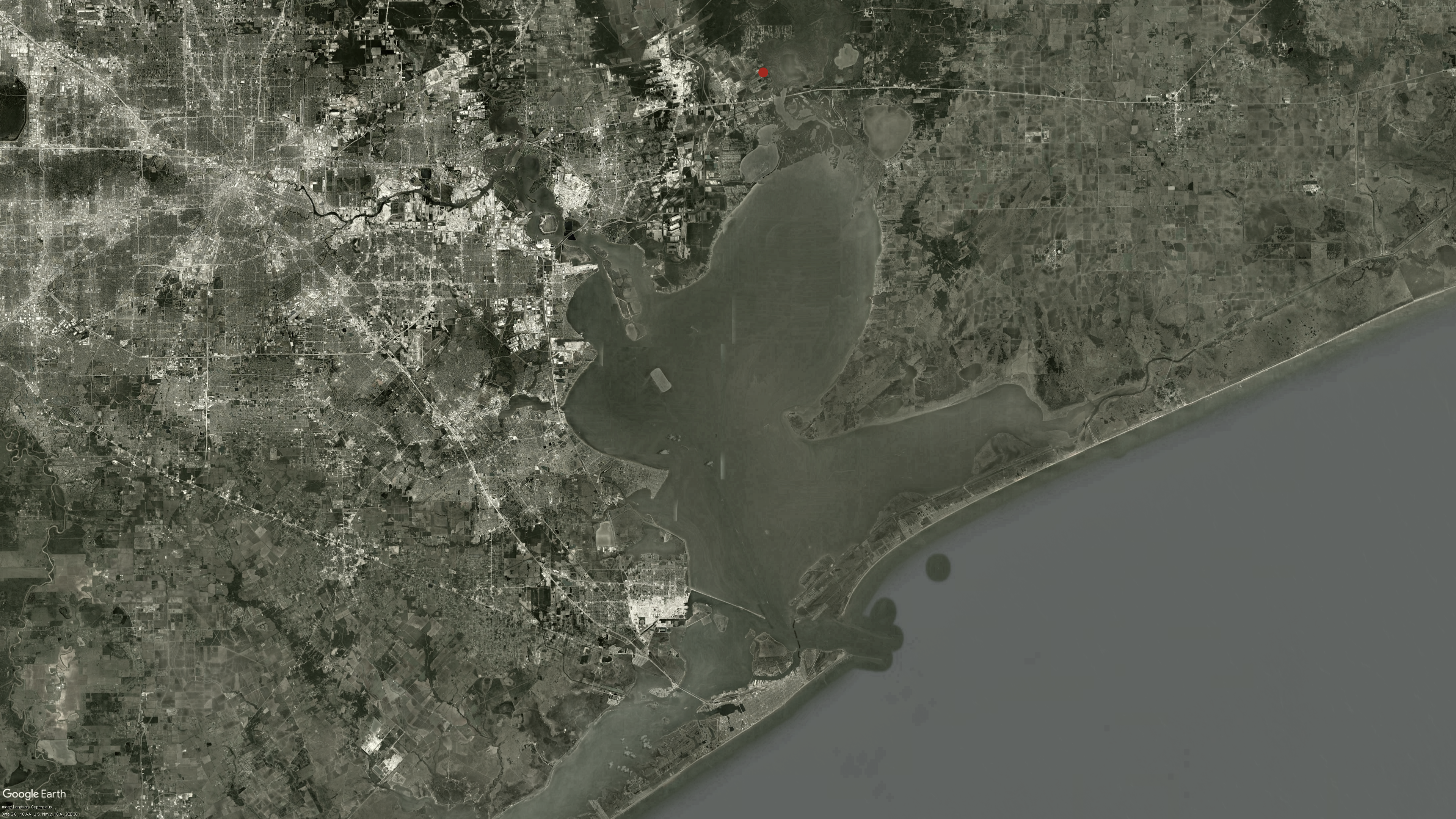
This project, situated east of Houston, is set within a rural landscape shaped by water and industry. Surrounded by Old River, Lost Lake, Lost River, and the Trinity River, all feeding into Trinity Bay, the site offers a rich ecological framework while revealing the impacts of over farming and ecological loss.
Our design responds to this dual condition: an environment marked both by abundant water systems and diminished biodiversity. Strategies of water reclamation, rainwater harvesting, and sustainable land management are integrated into the project, supporting the restoration of natural ecologies while advancing environmental resilience.
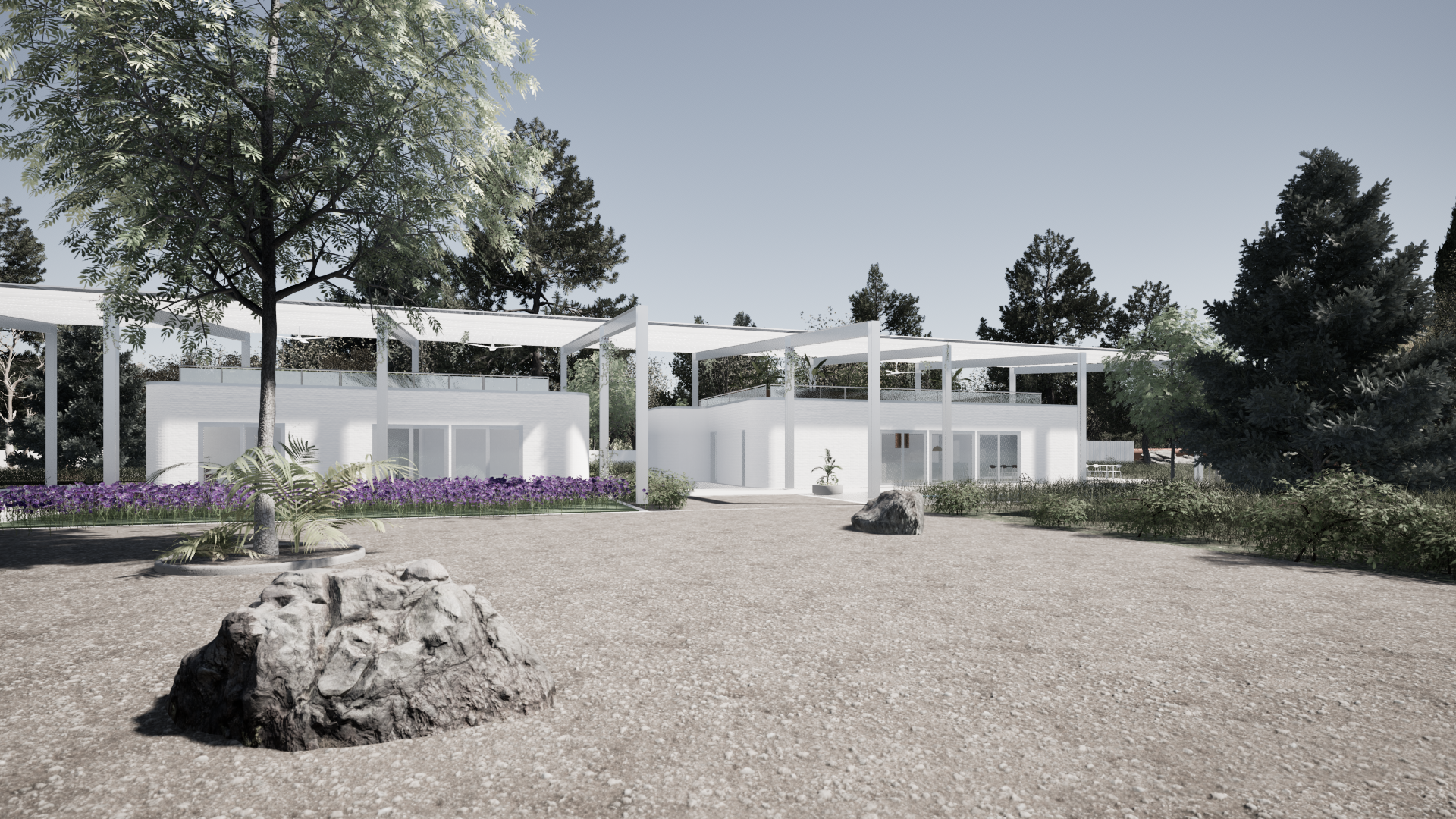
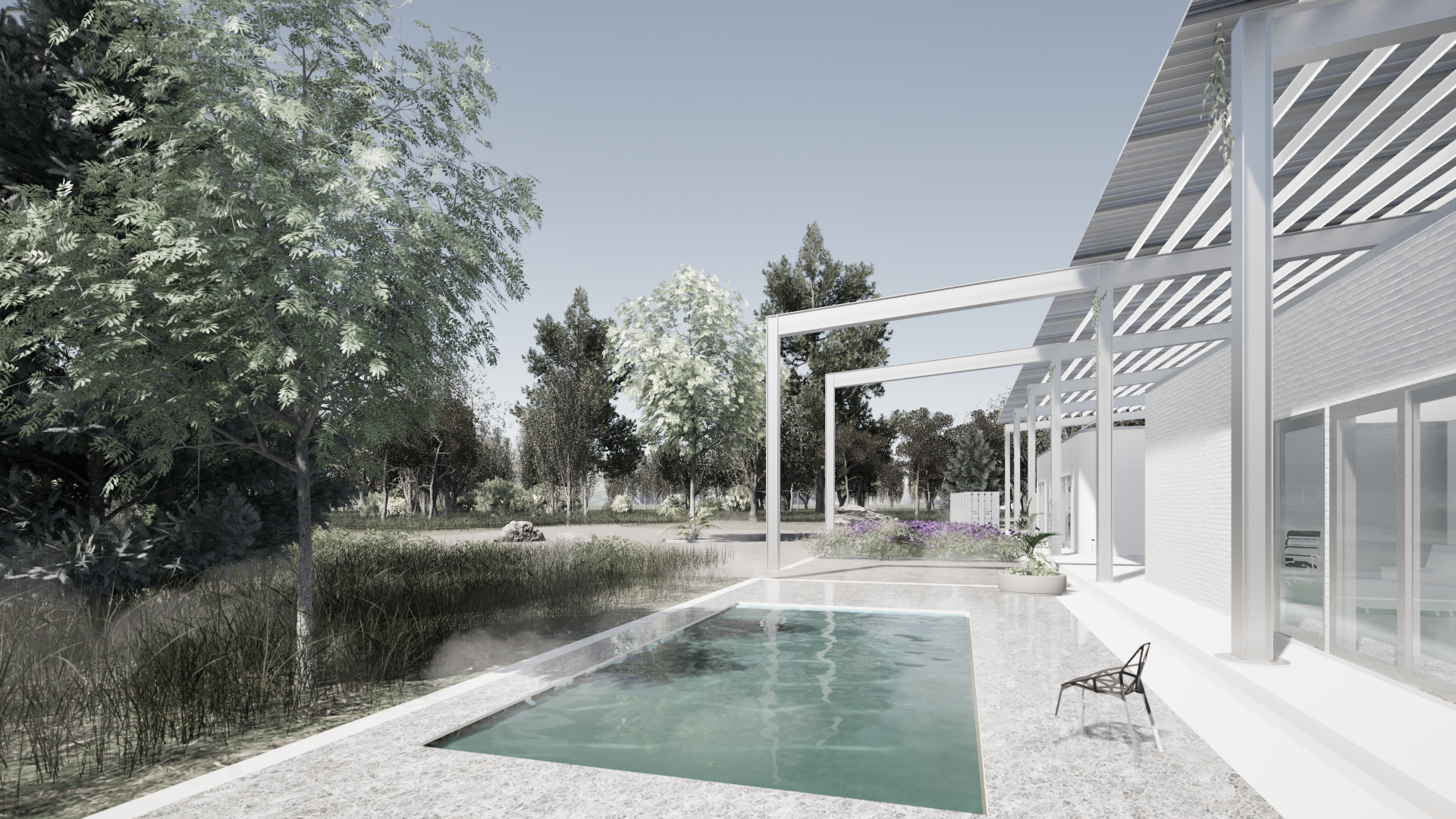
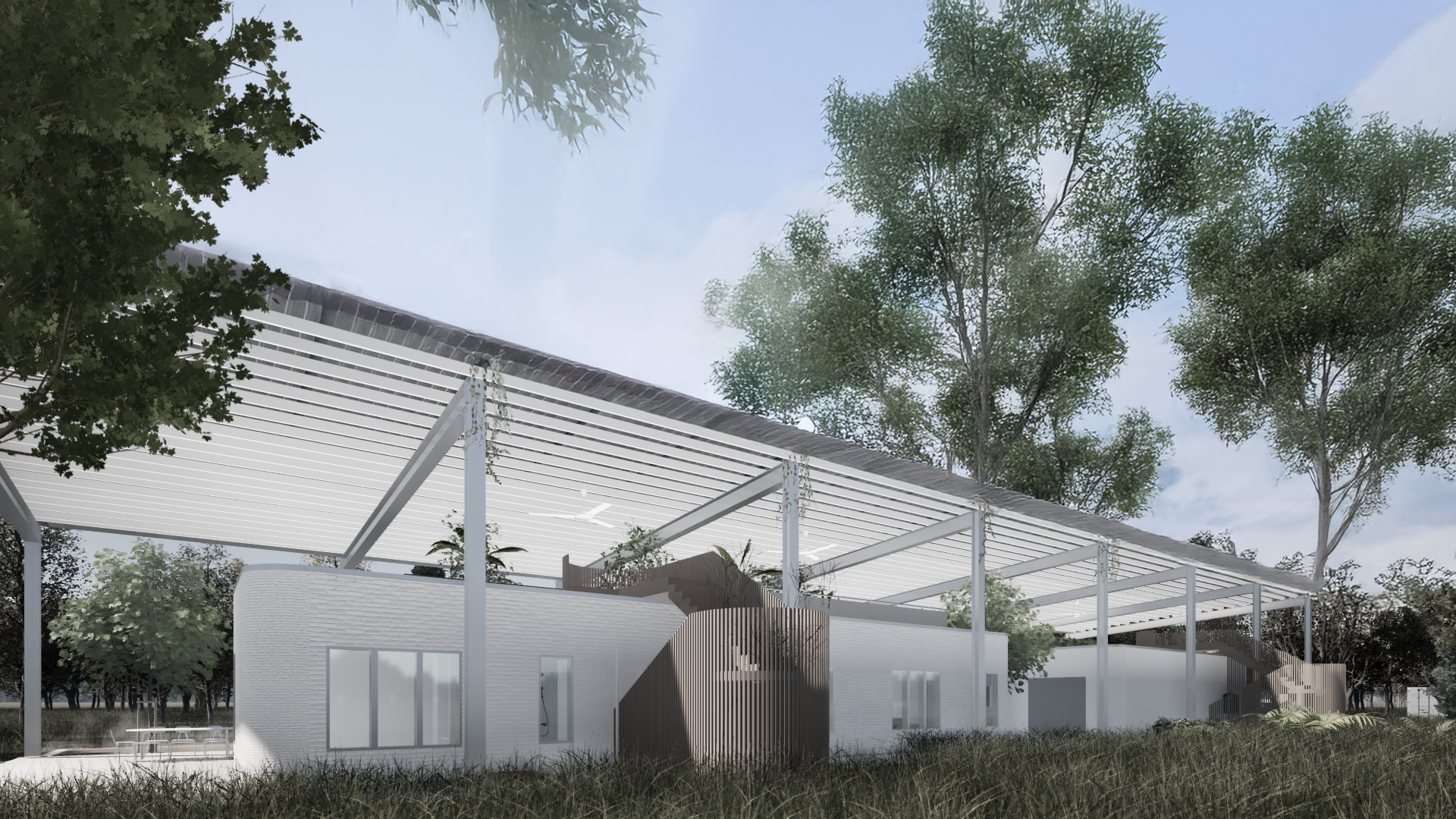
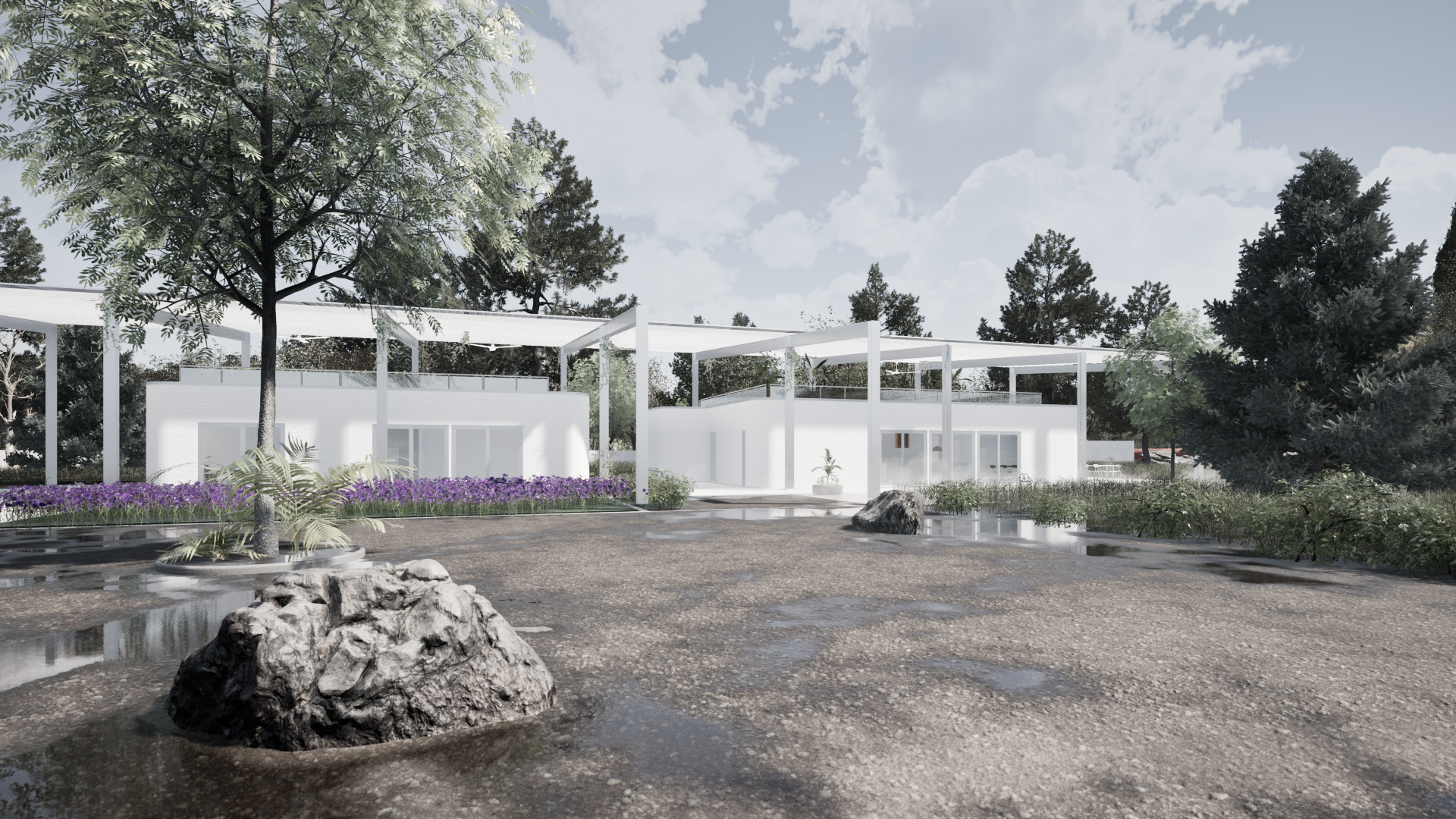
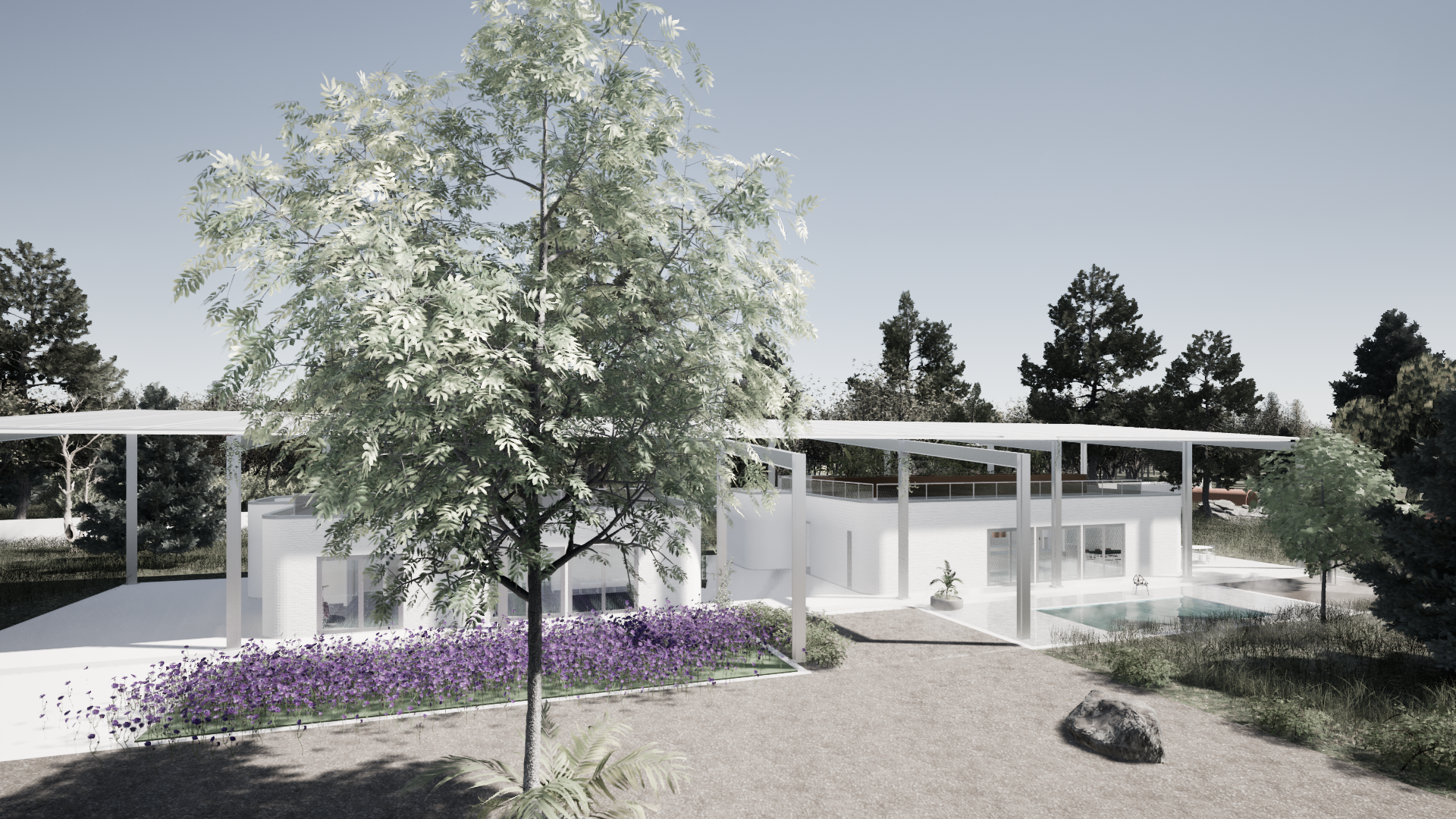
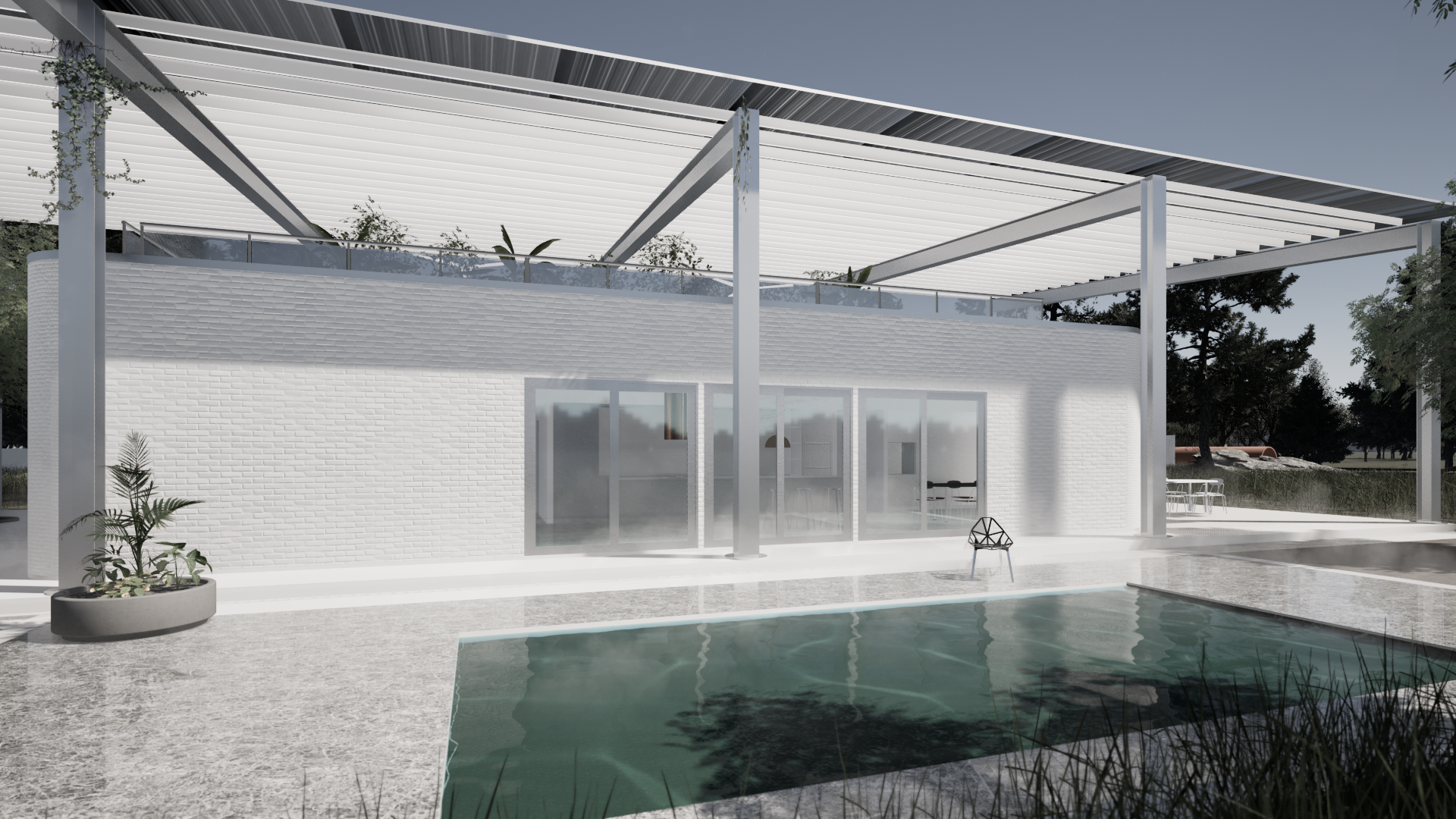
A recurring typology in the region, the metal shed, became a central point of departure. Its systematic structural framework, often supporting varied utilitarian programs, provided an organizational language. We reimagine this structure as a superstructure: a unifying umbrella that organizes work–live programs beneath, blurring thresholds between inside and outside, living and working. Dining can spill outward, workspaces expand into covered exteriors, and roofscapes transform into cultivated gardens.
The superstructure also serves as a platform for sustainability, incorporating solar energy and rainwater collection. Downspouts feed a newly introduced pond for water reclamation, while rooftop gardens benefit from captured rainwater irrigation. These systems reduce reliance on municipal resources, enhance energy efficiency, and weave sustainable infrastructure into daily life.
In doing so, the project pays homage to the area’s industrial past while proposing a renewed balance between human habitation and ecological restoration. It operates as both dwelling and landscape infrastructure — a framework for resilient living that is deeply tied to place.