
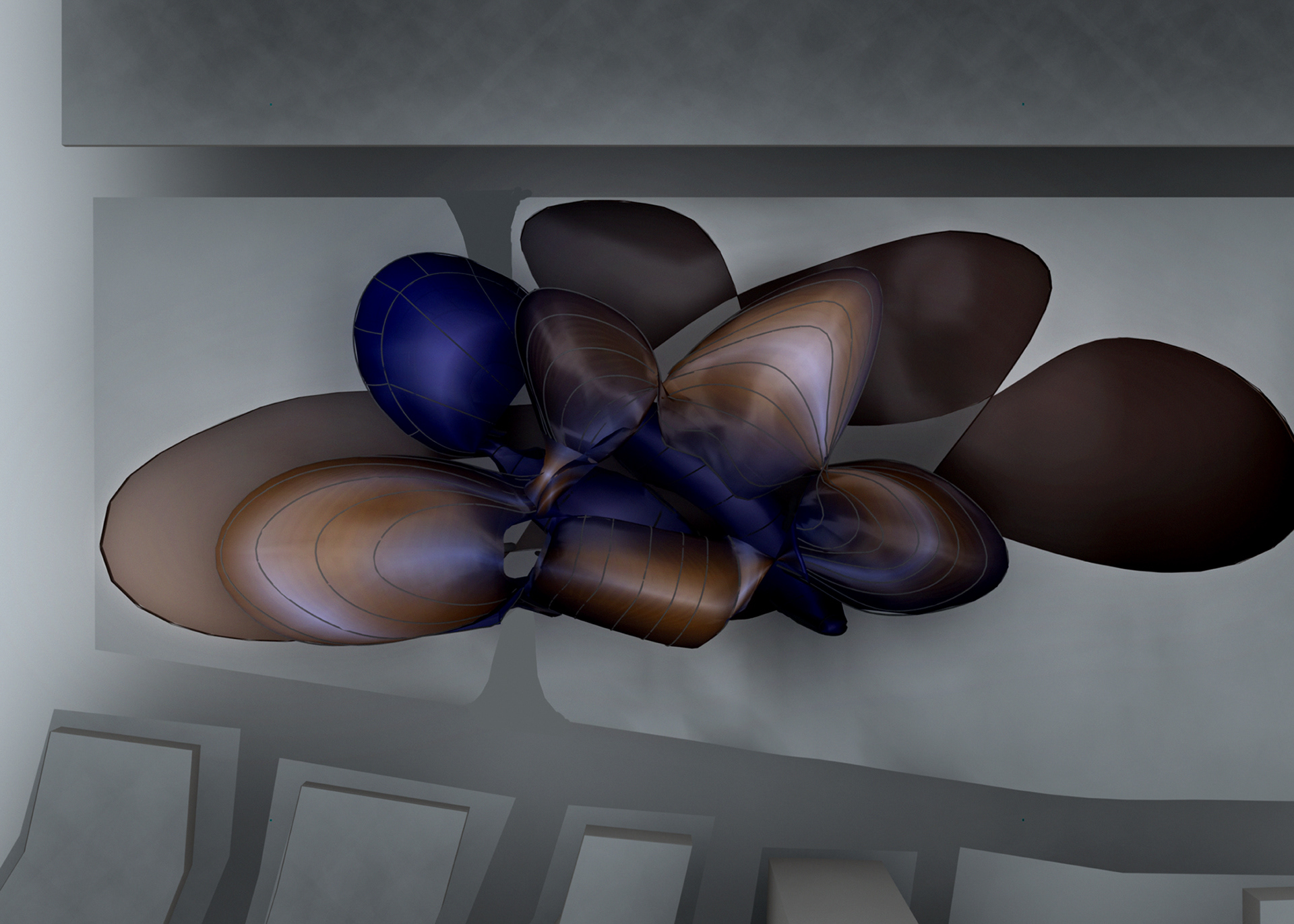
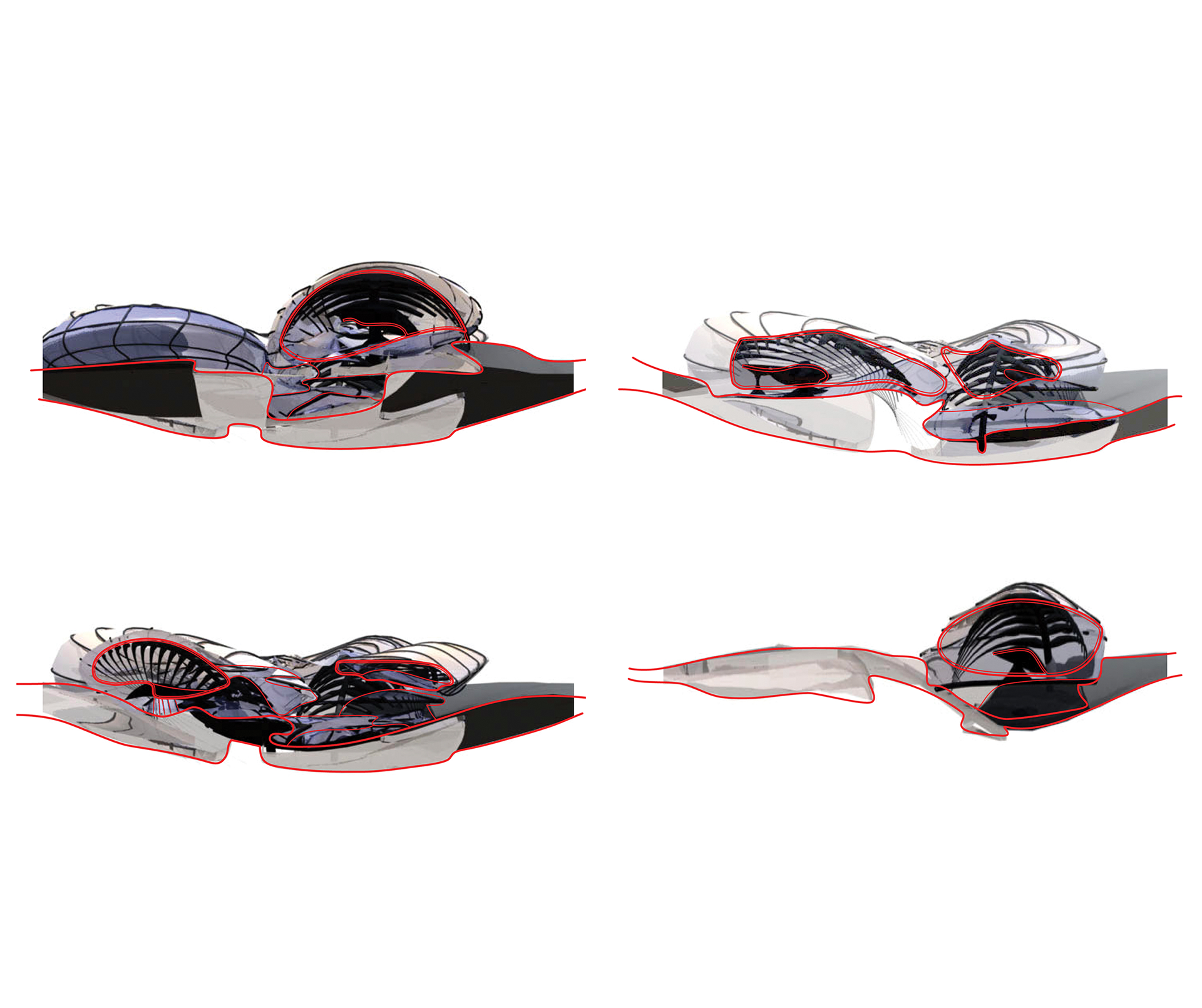
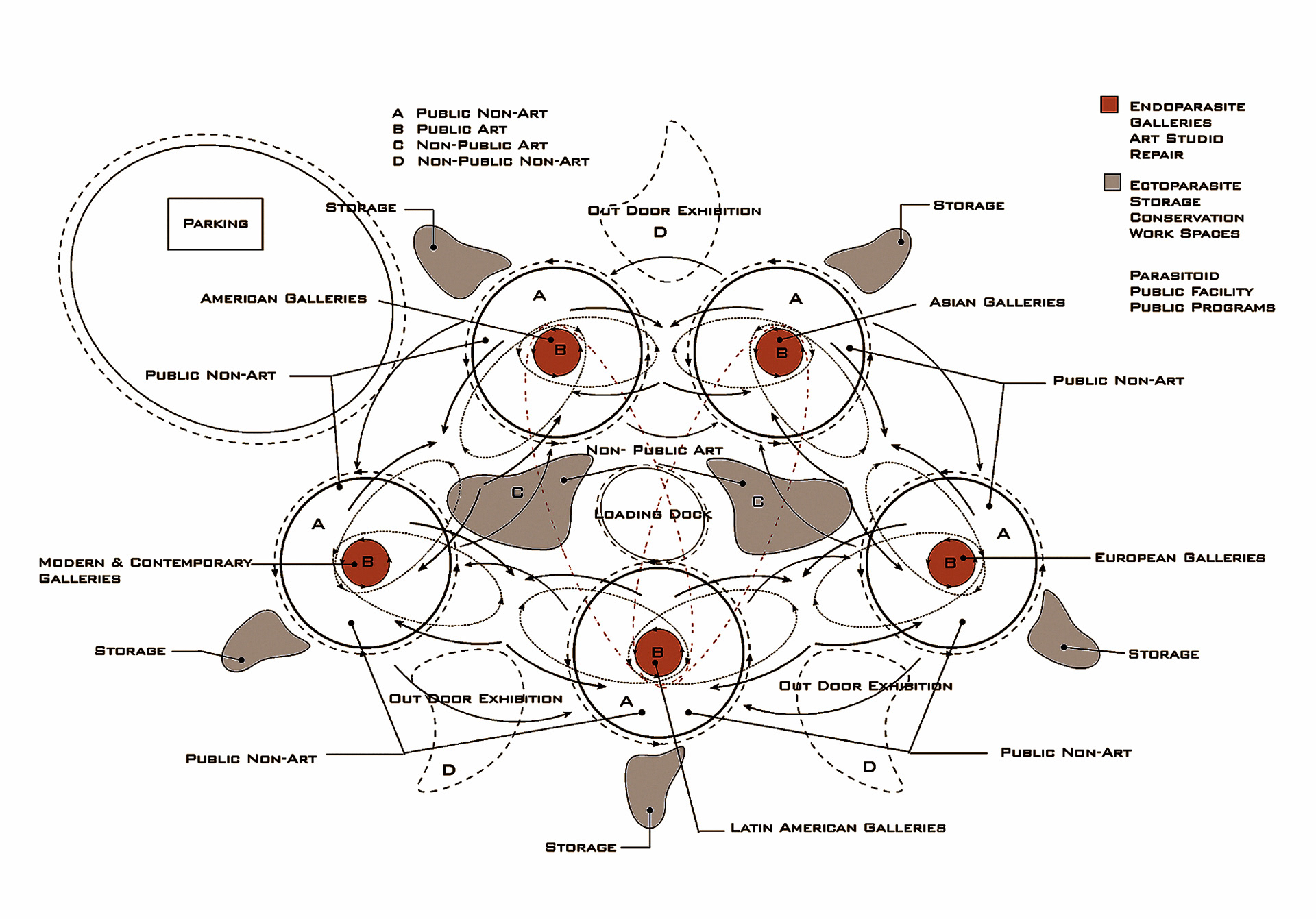
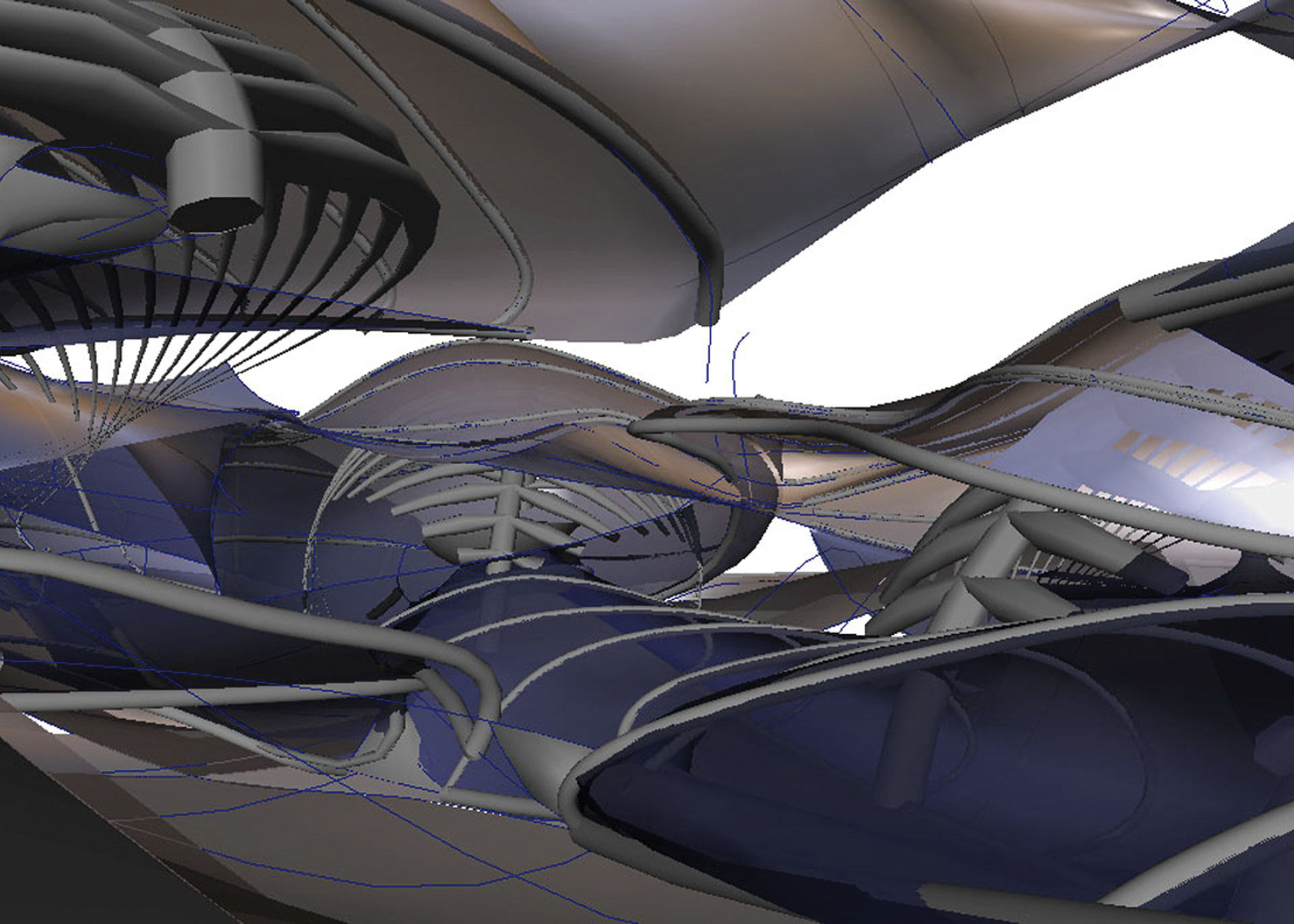
During my graduate studies at Columbia University GSAPP, my education took on a more radical and experimental direction, grounded in the exploration of architectural language. I pursued research that examined how mathematics and algorithmic systems could inform design processes and generate new spatial possibilities.
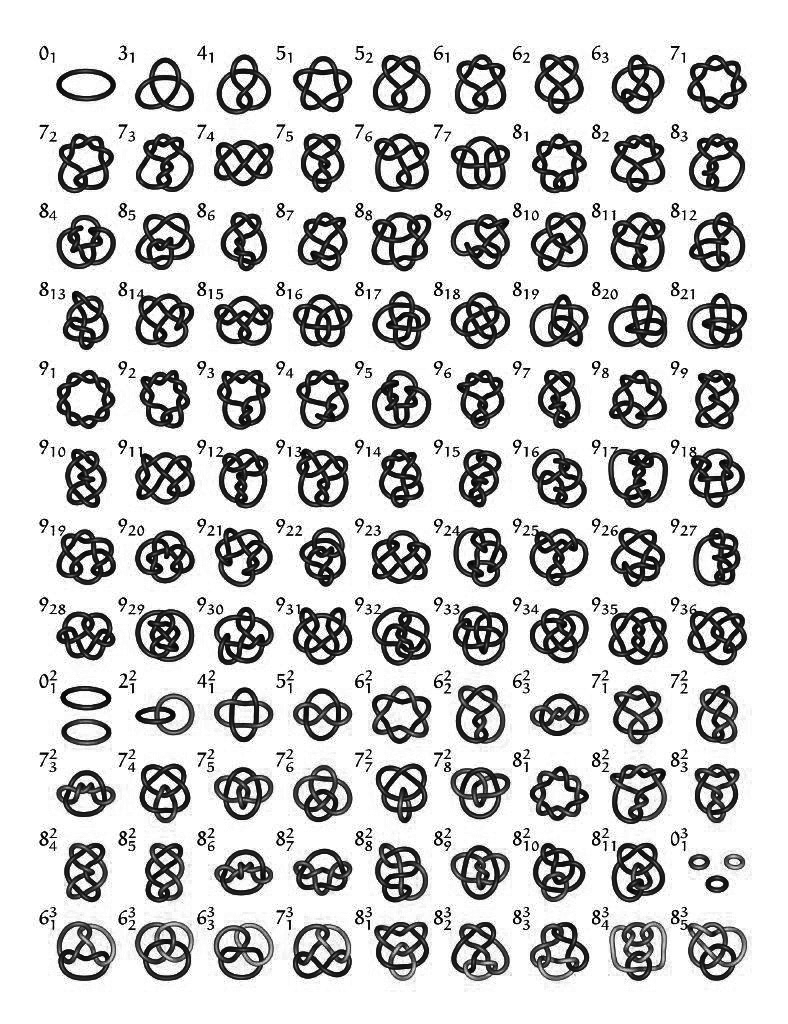
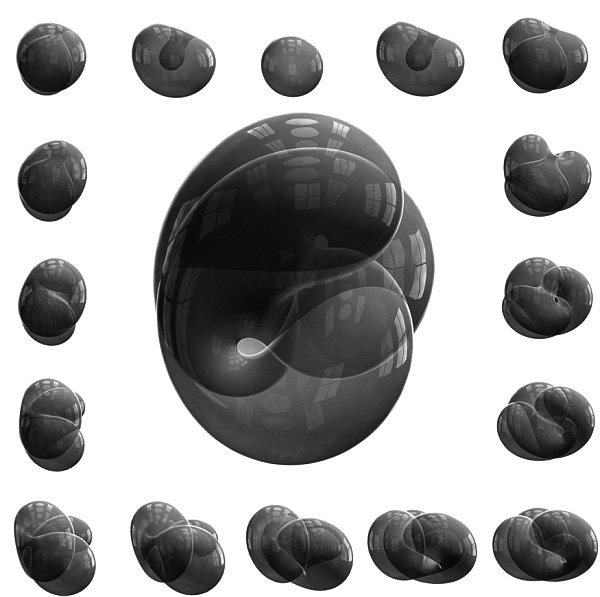
One area of investigation was Knot Theory, a branch of mathematics concerned with the study of knots. This framework provided a systematic language for translating two-dimensional diagrams into continuous three-dimensional surfaces, opening up opportunities to explore continuity, complexity, and topology in architectural form.
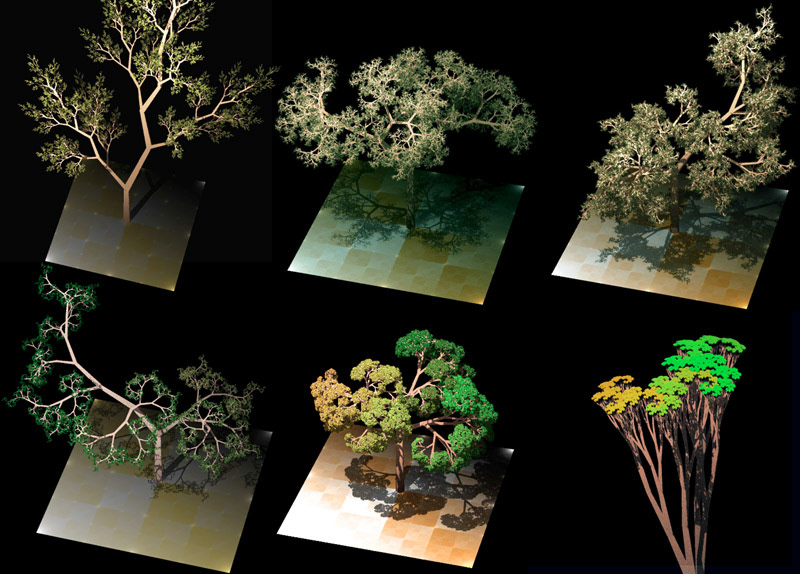
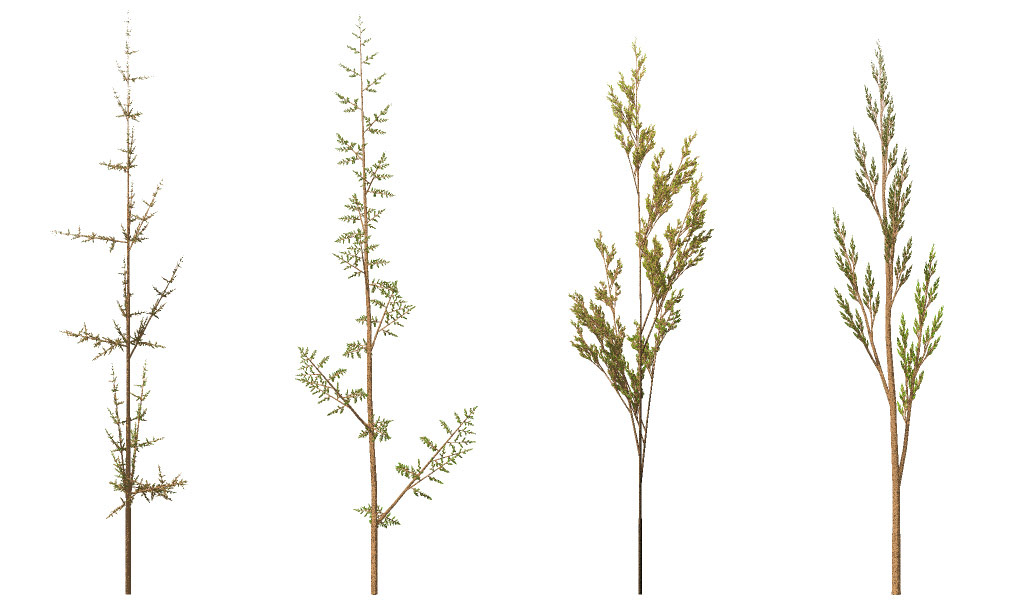
In parallel, I studied L-systems (Lindenmayer systems), an algorithmic language originally developed to model the growth of algae and other natural systems. Through this lens, I examined how generated strings of code could be translated into geometric structures. L-systems offered a powerful way to simulate the structural growth and branching patterns of natural ecologies, highlighting how algorithms could act as both descriptive and generative tools in architectural design.
Together, these studies bridged mathematics, computation, and design, offering insights into how abstract systems can be operationalized as architectural language — moving from the diagrammatic to the spatial, from theory to form.